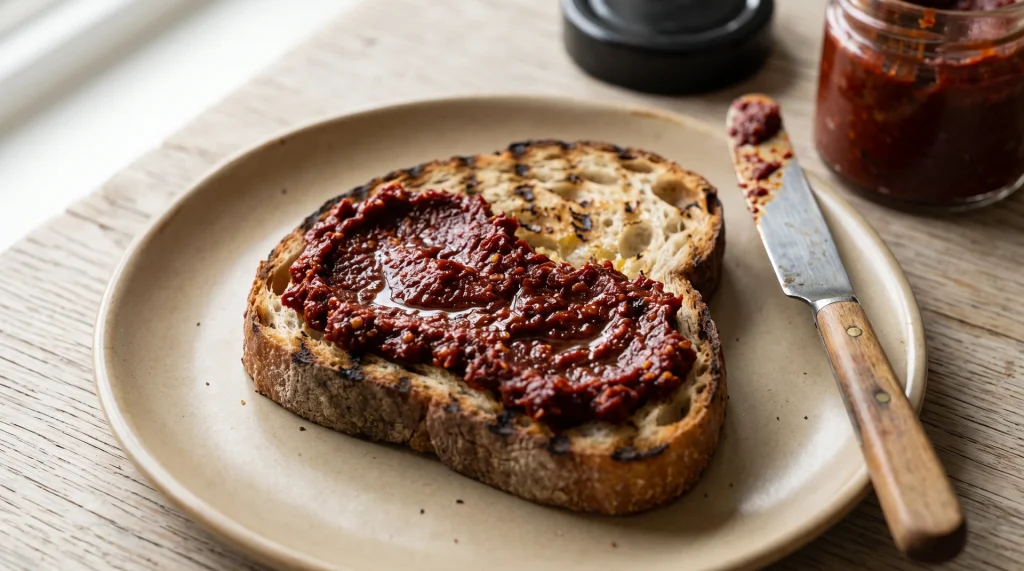
Biber salçası is the pantry staple that does more work than any other jar in a Turkish kitchen. Here’s what it is, what it isn’t, and eight ways to put it to use tonight.
What Turkish Pepper Paste Is
Biber salçası — pepper paste — starts with fresh peppers, not dried spice. Growers near Antakya harvest them by hand, deseed them, salt them, and cook them down slowly until the water is gone and what’s left is a thick, deep-red concentrate. Some batches finish in the sun; others finish on low heat. Either way, the result is the same: a jar of pure pepper, reduced to its most concentrated form.
There are two main styles. Tatlı (sweet) pepper paste is made from mild, thick-walled peppers close to a red bell pepper — it reads as savory and faintly sweet, with no real heat. Acı (hot) pepper paste uses spicier varieties and carries real warmth, though rarely anything close to a habanero. Most Turkish home cooks keep both on hand and blend them to taste. If a recipe just says “pepper paste” without specifying, sweet is the safer default — you can always add heat separately with red pepper flakes or a hot paste on the side.
Our own pepper paste is the sweet style: peppers and salt, nothing else.
How It Differs from Harissa, Gochujang, and Tomato Paste
These four condiments get lumped together because they’re all thick, red, and pepper-forward, but they behave differently in a pan.
Harissa
A North African chili paste built with olive oil, garlic, and warm spices like cumin and caraway. It’s aromatic and spiced in a way pepper paste never is — pepper paste has no added spice at all, just peppers and salt. Swap one for the other and the dish changes character, not just heat level.
Gochujang
Fermented, made from chilies, glutinous rice, and fermented soybean, and it brings a sweet, funky umami that pepper paste doesn’t have. Gochujang works beautifully in glazes and marinades on its own terms — it isn’t a stand-in for salça, it’s a different tool.
Tomato paste
The closest cousin by texture, but the flavor is rounder and more acidic, without the sweetness and depth that comes from reducing peppers specifically. Turkish cooking usually calls for both tomato paste and pepper paste in the same pot, often in equal amounts, because they do different jobs: tomato paste adds body and tang, pepper paste adds concentrated pepper flavor and color.
Eight Ways to Cook with Pepper Paste Tonight
A little goes a long way. Start with the amounts below, taste, and adjust — pepper paste is salted already, so hold back on additional salt until the dish is close to done.
- Eggs, the Turkish way. Menemen is the clearest introduction to what pepper paste does for breakfast. Melt butter in a pan, stir in a tablespoon of pepper paste with chopped tomato and green pepper, let it cook down for a few minutes until the raw edge is gone, then add eggs and scramble them through.
- Stews and braises. Add one to two tablespoons per pot near the start, right after the onions soften, so it has time to cook into the fat rather than sitting raw on top. This is standard in güveç-style vegetable and meat stews, where the paste builds the base the same way tomato paste does in a Bolognese.
- Marinades. Whisk a tablespoon of pepper paste into olive oil, lemon juice, and garlic for chicken, lamb, or firm white fish. The salt in the paste seasons the meat as it marinates, so use less added salt than you normally would.
- A butter-paste baste. Melt butter with a spoonful of pepper paste until it turns a deep orange-red, then spoon it over mantı, roasted vegetables, or a bowl of yogurt-topped grains right before serving. This is the same technique behind the butter drizzled over Turkish dumplings, and it works on almost anything that would otherwise benefit from brown butter.
- Soups. A tablespoon stirred into red lentil soup (mercimek çorbası) or a simple vegetable soup adds color and a savory backbone without changing the dish into something else. Add it with the aromatics, not at the end.
- Walnut-pepper dips. Muhammara-style dips lean on roasted red peppers and walnuts, but a spoonful of pepper paste deepens the color and adds a concentrated pepper note that raw peppers alone don’t give. Blend it in with the walnuts, breadcrumbs, and pomegranate molasses.
- A breakfast spread. Mix pepper paste with a little olive oil or softened butter and spread it on warm bread, the way you would a savory jam. It’s a fixture of a Turkish breakfast spread (kahvaltı) alongside cheese and olives — simple, and it needs nothing else.
- Grain salads. Kısır, the salad built on fine bulgur, uses pepper paste as its main seasoning — usually a tablespoon or two worked into the soaked bulgur along with tomato paste, lemon, and olive oil, before the vegetables and herbs go in. Our full method is in what is kısır.
FAQ
Is Turkish pepper paste the same as red pepper paste?
Yes — “Turkish pepper paste” and “red pepper paste” describe the same product, biber salçası. Some labels distinguish sweet (tatlı) from hot (acı); check the label if heat level matters for your dish.
Does pepper paste need to be cooked, or can I use it raw?
It’s already cooked during production, so it’s safe raw — stirred into a dip or spread on bread, for instance. Cooking it briefly in oil or butter before adding other ingredients deepens the flavor further, which is why most stovetop recipes call for that step.
How long does an opened jar of pepper paste keep?
Refrigerated, with a thin layer of oil poured over the surface to seal out air, an opened jar keeps for several months. The salt content does a lot of the preservation work on its own.
Is Turkish pepper paste spicy?
Sweet pepper paste (tatlı) has no real heat. Hot pepper paste (acı) has noticeable warmth but is milder than most chili pastes — closer to a mild-to-medium salsa than a hot sauce. Many cooks blend the two to control heat precisely.
Keep Reading
Turkish pepper paste substitutes — what to reach for when the jar runs out, and when nothing else will do.
Leave a Reply
You must be logged in to post a comment.